
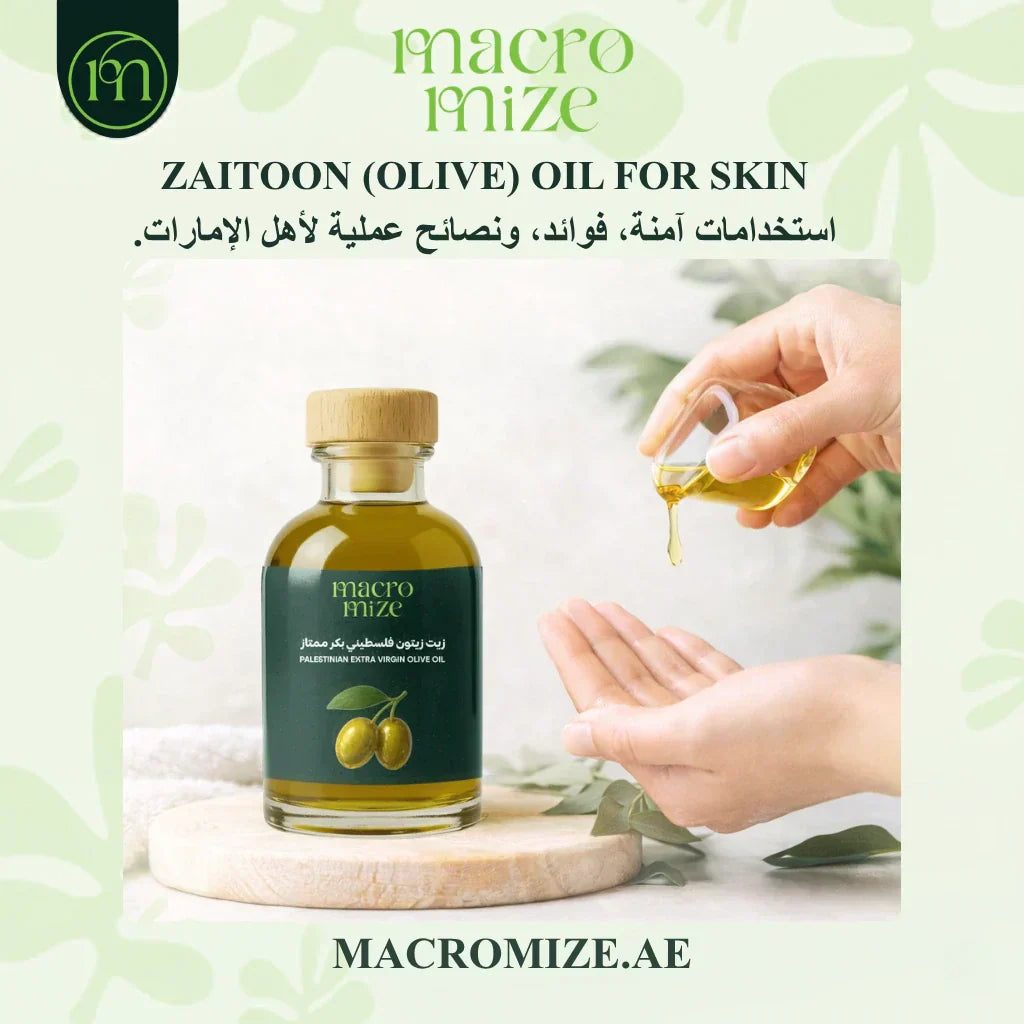
Zaitoon oil has been part of Arab beauty culture long before any skincare brand bottled it. Palestinian and Levantine families have used cold-pressed olive oil to condition skin, soothe dryness, and as a gentle cleansing agent for generations. Today, the science behind why it works is significantly clearer, and so are the conditions under which it should not be used.
Macromize serves you all valuable information about the topical and dietary role of food-grade extra virgin olive oil in skin health. Macromize's Organic Palestinian Extra Virgin Olive Oil is a cold-pressed, unrefined, single-origin oil, and that distinction matters in everything discussed below. We will cover practical application, what the research actually shows (and where it doesn't), what to avoid, and how the UAE's specific climate changes the natural profile of EVOO.
What Are the Skin Benefits of Olive Oil in Your Diet?
The strongest case for olive oil and skin health is dietary, not topical. This is the part most UAE skincare content skips entirely.
When you consume Macromize Palestinian EVOO regularly, the oil's monounsaturated fatty acids, Vitamin E (tocopherols), and polyphenols - particularly hydroxytyrosol and oleocanthal - enter your bloodstream and circulate systemically. They reach the dermis, the collagen-producing layer of the skin that topical application rarely penetrates. A study published in Molecular Nutrition and Food Research found that hydroxytyrosol, one of EVOO's key polyphenols, protected human skin cells from oxidative stress and reduced markers of cellular ageing. You cannot replicate this through topical use because hydroxytyrosol needs to be absorbed and metabolised to reach skin tissue at the cellular level.
Research on Mediterranean diet populations consistently links high EVOO consumption to better skin elasticity, lower inflammatory markers, and delayed visible aging compared to populations with low olive oil intake. These populations aren't applying olive oil as a beauty product. They're eating it every day as a staple fat.
The practical implication: using Macromize olive oil as your primary cooking fat, drizzling it raw on salads, or taking a tablespoon before meals delivers skin benefits that a face mask simply cannot. Healthy skin from the inside out is not marketing language here. It is the mechanism by which EVOO's bioactive compounds actually function.
For everyday cooking and dietary uses of Macromize olive oil, visit our guide on cooking with olive oil.
Can I Use Olive Oil Directly on My Face?
The short answer: yes, but it comes with real conditions that depend on your skin type. Because olive oil happens to be thick and heavy in nature, so acne-prone skin types should use olive oil with precautionary measures.
Macromize's Palestinian EVOO is food-grade and cold-pressed with zero additives. Which is actually what you want if you are applying oil to your skin. Refined oils and those with chemical preservatives have no place on your face in the UAE climate. The problem is not the quality of the oil; it is the nature of olive oil as a molecule.
Extra virgin olive oil is composed of approximately 71–80% oleic acid, a monounsaturated fatty acid. Oleic acid is an excellent emollient for dry skin - it is rich, deeply hydrating, and creates a protective occlusive layer that locks in moisture. In the UAE, where air-conditioned offices and dry desert air deplete the skin's natural moisture barrier daily, that occlusive property is genuinely useful.
However, oleic acid is also the reason why olive oil carries a comedogenic rating of 2 out of 5. That rating means it has a moderately low likelihood of clogging pores. For most people with dry or normal skin, this is a non-issue. For those with oily, combination, or acne-prone skin, it is a real risk - especially on the face, where sebum production is already higher. The same high-oleic acid content that makes EVOO so nourishing for dry skin can, if overused on oily skin, create an environment where acne-causing bacteria are fed and pores are partially blocked.
Our clearest guidance:
-
Use Macromize olive oil topically on your face only if your skin is genuinely dry.
-
Apply no more than 1-3 drops on damp skin (water helps the oil spread without requiring excess product).
-
If you have oily, acne-prone, or combination skin, reserve the oil for your body, heels, elbows, and cuticles
-
The best option: Eat it instead for the skin benefits that actually matter.
Always patch test before applying any new oil to your face: apply a small amount on the inside of your wrist or behind your ear and wait 24 hours before using it on larger areas.
Is Olive Oil Good for Acne or Sensitive Skin?
For acne-prone skin, the topical use of olive oil on the face is not recommended. We’ve brought all the reasoning to be specific.
People with acne tend to have lower concentrations of linoleic acid in their skin's natural sebum. Linoleic acid is the lighter fatty acid that helps thin out sebum so it doesn't block pores. Olive oil is high in oleic acid and low in linoleic acid. Applying a high-oleic oil to already oleic-heavy skin can compound the imbalance, feed acne-causing bacteria, and worsen congestion. Cosmetic dermatologists consistently recommend linoleic-rich oils - jojoba, rosehip, grapeseed, squalane - for acne-prone skin instead.
Olive Oil for Sensitive Skin
For sensitive skin without active acne, olive oil can work if applied with care, tested in a small area first, and used in tiny amounts on damp skin. Vitamin E and polyphenols in EVOO do have anti-inflammatory properties, and for someone with reactive dry skin that is not acne-driven, the oil may reduce redness and restore comfort.
The nuanced reality that most blog posts avoid: the distinction between sensitive and acne-prone skin matters enormously here. Sensitive skin that is dry and reactive to environmental triggers may respond well to a small amount of food-grade EVOO. Oily, acne-prone skin is a categorically different situation. Do not conflate the two. If you have persistent acne or a diagnosed skin condition like eczema or rosacea, consult a dermatologist before introducing any oil into your face routine.
If you have acne-prone skin and want the anti-inflammatory benefits of olive oil's polyphenols, eat it. This pathway delivers oleocanthal and hydroxytyrosol systemically, where their anti-inflammatory effect on skin actually reaches the right depth.
How Should I Apply Olive Oil to My Face and Body?
Face (dry skin only):
As you have chosen freshly made olive oil from a recent harvest, now it’s show time application for a better you.
-
Cleanse your face first: Applying oil to skin that carries residual sunscreen, makeup, or pollution creates a sealed layer over contaminants, which can irritate or block pores.
-
After cleansing, while skin is still slightly damp, press 1–2 drops of Macromize olive oil between your palms and gently pat onto cheeks, forehead, and chin.
-
Avoid the nose and T-zone if you tend toward oiliness there. If after 10 mins, your skin feels congested or overly heavy, blot the excess with a clean tissue.
Applying Olive Oil on Face Overnight Benefits
Olive Oil is used in honey and oil as a facial mask for effective hydration on the skin. You can use it as a night moisturiser, as a natural make-up remover and post-shave soothing oil.

As a Night Moisturiser During Overnight use: Apply a single drop to each cheek on clean, damp skin before bed. Rinse with a gentle cleanser in the morning. Do this on a small patch first and assess over 3-4 nights before committing to regular overnight use.
As a makeup remover: Olive oil is one of the most effective natural makeup removers because it dissolves oil-based products (including long-wear foundations and waterproof mascara) through the like-dissolves-like principle.
-
Apply a few drops to a cotton pad and sweep gently over the face.
-
Follow with a water-based cleanser to remove all oil residue - this step is not optional.
-
Leaving olive oil on after makeup removal and going to sleep without cleansing is the most common reason people experience breakouts after using it.
Body and Targeted care: Olive oil works very well on areas with thicker, less pore-dense skin. Dry heels, elbows, knees, and cuticles are ideal.
Apply after a shower while skin is damp, massage in, and the oleic acid will soften and condition without the comedogenic concern that exists on the face.
For body massage: Macromize Palestinian EVOO's smooth texture and mild grassy scent make it a suitable base for massage. It absorbs at a moderate rate - slower than a dedicated massage oil. But its Vitamin E and polyphenol content are a meaningful bonus. Add a few drops of lavender essential oil if you prefer fragrance. This is a common practice in Arab hammam culture.
What Can You Mix with Olive Oil for Skin?
Olive oil and sugar (gentle exfoliant): Mix one tablespoon of Macromize EVOO with one teaspoon of fine white sugar. Apply to face or body in gentle circular motions and rinse. The sugar provides mild physical exfoliation; the oil conditions and prevents the scrub from stripping moisture. Use on the face no more than once a week. Avoid entirely on active breakouts.
Olive oil and honey (dry skin mask):
Combine equal parts food-grade EVOO and raw honey. Apply to clean skin and leave for 10–15 minutes before rinsing. Honey is a natural humectant that draws moisture into the skin; olive oil seals it in. This combination suits the dry UAE winter months or after long air-conditioned days.
Olive oil and oatmeal (sensitive skin soothe):
Mix a tablespoon of finely ground oats with enough olive oil to make a paste. Oats are widely used to calm irritated, reactive skin; olive oil provides the emollient base. Apply as a mask and rinse gently. Useful for calming dry, wind-stressed skin.
Olive oil and aloe vera gel:
One part EVOO to two parts pure aloe vera gel. The aloe provides a water-phase humectant and soothes redness; the olive oil prevents the aloe from drying the skin as it evaporates. This ratio keeps the mixture lighter - better for those who find straight olive oil too heavy.
What Not to Mix with Olive Oil for Face?
Do not mix olive oil with lemon juice and apply to sun-exposed skin. Citric acid combined with UV exposure can cause phototoxic reactions. The combination is fine in food; it is not appropriate as a face treatment in a climate with UAE's level of UV intensity.
How Does UAE Climate Affect Olive Oil Skincare?
The UAE creates specific skin conditions that the majority of generic skincare content ignores entirely.
Dubai and Abu Dhabi's combination of intense outdoor UV heat and heavily air-conditioned interiors creates a push-pull effect on the skin: excessive heat and sun exposure outdoors accelerate transepidermal water loss, while air conditioning indoors strips humidity from the air and dehydrates the skin from the outside. The result, for many residents, is skin that is simultaneously oil-producing in some areas and severely dehydrated in others. Which is why, generic advice about oil-based skincare often gives confusing results.
For the dry-skin side of this equation, olive oil's oleic acid is genuinely useful. Applying 1–2 drops on damp skin before entering an air-conditioned environment creates an occlusive barrier that slows moisture evaporation. This is particularly effective on heels, hands, and any area where the skin is visibly rough or cracking from the combination of heat, sun, and AC.
In summer (June to September), when UAE humidity spikes, heavy oils feel uncomfortable and can trap sweat. During these months, limit topical olive oil to the body and targeted dry patches, and prioritize the dietary route for skin benefits.
Which Olive Oil Is Best for Skin, and Why Quality Matters?
This section exists because not all "olive oil" sold in the UAE is the same product.
Refined olive oil, "light" olive oil, and blended supermarket oils have been processed using heat or chemical solvents. That processing strips out most of the polyphenols - hydroxytyrosol, oleocanthal, oleuropein, and Vitamin E. What remains is primarily oleic acid with minimal antioxidant content. If your goal for using olive oil on your skin is antioxidant protection, barrier support, and mild anti-inflammatory properties, a refined oil will not deliver them. You get the emollient effect of oleic acid and little else.
Cold-pressed extra virgin olive oil retains the full polyphenol profile intact. Organic certification matters for topical use just as it does for food. Conventionally farmed olives may carry pesticide residues that concentrate in the oil. When that oil goes on your skin - a highly permeable organ - the case for choosing certified organic is even stronger than it is for cooking.
Macromize's Palestinian EVOO is cold-pressed, certified organic, single-origin, and free of additives. It is the same oil you would eat, which is precisely the right standard to hold any oil to if you plan to put it on your skin.
| Property | Macromize Palestinian EVOO | Coconut Oil | Argan Oil | Jojoba Oil | Refined Olive Oil |
|---|---|---|---|---|---|
| Comedogenic Rating | 2 (mildly low) | 4 (high) | 0 (non-comedogenic) | 2 (mildly low) | 2 (mildly low) |
| Polyphenol Content | High (cold-pressed, unrefined) | Very low | Low–moderate | None | Very low (refined) |
| Vitamin E | High (tocopherols intact) | Low | High | Moderate | Low |
| Best Skin Type | Dry, mature, normal | Very dry body skin only | All types (incl. acne-prone) | All types | Dry |
| Antioxidant Activity | High (hydroxytyrosol, oleocanthal) | Negligible | Moderate | None | Negligible |
| Organic / Additive Free | Yes | Varies | Varies | Varies | Typically No |
| Suitable for Face | Dry skin only | Not recommended | Yes | Yes | Dry skin only |
| Suitable for Body | Yes | Yes | Yes | Yes | Yes |
| Scent | Mild, grassy-peppery | Strong coconut | Subtle nutty | Odourless | Odourless |
The key distinction that this table makes clear: the polyphenol advantage belongs exclusively to cold-pressed, unrefined EVOO. Argan oil and jojoba oil are better topical choices for oily or acne-prone skin, but they lack the antioxidant depth of a quality EVOO. For dry and mature skin with no active acne, Macromize Palestinian EVOO competes directly with premium beauty oils at a fraction of the price - with the added benefit that you can also eat it.
Disadvantages of Olive Oil on Face: Are There Side Effects or Disadvantages?
Pore Congestion:
This is the most realistic risk. Olive oil's oleic acid content can partially block pores, particularly on the face and particularly for oily skin types. Signs include small whiteheads, a feeling of congestion, or dullness developing over 2–3 weeks of regular use. If any of these appear, stop facial application and switch to dietary use only.
Contact Dermatitis:
Olive oil allergy is rare but possible. It presents as redness, itching, or small raised bumps at the application site. A patch test on the inner wrist or behind the ear for 24 hours before first facial use will catch this. If you know you have a sensitivity to any olive-derived ingredient, skip topical use entirely.
It is not a Sunscreen - Full Stop.
Some older Arab and Mediterranean traditions of applying olive oil before sun exposure were adapted to a time before UV damage was understood at the cellular level. Olive oil provides no meaningful UV protection. In a country where UV Index regularly reaches 11–12 from May through September, applying olive oil and stepping outdoors without a broad-spectrum SPF is a direct route to accelerated skin aging and sun damage. Use your sunscreen every day. The olive oil goes on at night.
For Eczema and Rosacea:
The research on topical olive oil and eczema is mixed and leans cautiously. One study found that olive oil may delay skin barrier recovery in compromised skin. If you have a diagnosed inflammatory skin condition, consult your dermatologist before introducing any new oil topically, regardless of how natural its origin.
FAQ: Olive Oil for Skin
Can I apply olive oil on my face every day?
If your skin is dry and responds well to it, small amounts applied to damp skin at night can be used regularly. Daily use on oily or combination skin is not advised. Consistency over a few weeks will tell you clearly whether your skin tolerates it.
Is olive oil a good moisturizer?
It is an effective emollient. It prevents moisture loss by creating an occlusive layer on the skin's surface. It does not add water to skin the way a humectant like hyaluronic acid does. For best results, apply it on damp skin or over a water-based moisturizer so it seals in existing moisture rather than sitting on dry skin.
Will olive oil remove makeup?
Yes. It dissolves oil-based products very effectively, including waterproof mascara and long-wear foundation. Always follow with a gentle cleanser to remove the oil and dissolved makeup residue completely. Skipping this step and sleeping with the oil on is how breakouts happen.
Does olive oil help with wrinkles or aging?
Directly applied, olive oil will not reverse wrinkles. Consumed regularly, the polyphenols in EVOO - hydroxytyrosol and oleuropein - support collagen-producing fibroblasts, reduce oxidative damage to skin cells, and may slow the visible signs of aging over months of consistent dietary use. Skin cell turnover means visible changes from dietary EVOO take 8–12 weeks to appear.
Can olive oil dry out skin?
If applied to dirty skin and left to trap pollutants and bacteria, olive oil can irritate. Used correctly on clean, damp skin, it does the opposite: it seals moisture in. Always cleanse before applying.
Can I use olive oil on a baby's skin?
Olive oil has traditionally been used for infant massage in Palestinian, Levantine, and broader Arab culture. Current dermatological advice is cautious, however. Some studies suggest olive oil may not be ideal for newborn skin, which has a thinner, more permeable barrier than adult skin. For babies, consult a paediatrician. For toddlers and older children with dry skin, a small amount of food-grade EVOO on body skin (not the face) is generally considered low risk, but patch testing still applies.
Is olive oil good for hair and scalp too?
Yes, for dry hair and scalp. Warm a small amount of Macromize olive oil, apply to hair lengths and scalp, cover with a warm towel, and leave for 30 minutes before washing. This is a well-established traditional practice across the Arab world. It is not a permanent solution for scalp conditions, but as a conditioning treatment for dry or heat-damaged hair, it works simply and effectively.
How do I patch test olive oil?
Apply one or two drops to the inside of your wrist or the skin behind your ear. Leave it for 24 hours without washing the area. If you notice redness, itching, raised bumps, or any irritation, do not use olive oil on your face. If the area looks and feels normal after 24 hours, proceed to a small facial test area before full application.
Should I use olive oil on my face in the morning or at night?
Night. In the morning, you need your sunscreen to adhere cleanly to your skin. Applying an oil underneath or over SPF can dilute the sunscreen's effectiveness. At night, olive oil has time to work as an emollient without UV exposure or the need for layering other products on top.
Where to Start
If you already have Macromize Palestinian EVOO in your kitchen for cooking, you have everything you need to try it topically as well. The oil is the same product - food-grade, cold-pressed, certified organic, with the full polyphenol profile intact. There is no separate "cosmetic version" to buy.
Start by eating it consistently: one to two tablespoons daily in your food or raw. Give that 8–10 weeks before judging any skin results. If you want to explore topical use, begin with heels and hands, where the skin is toughest, then try a small amount on your face at night if your skin is dry.
Shop Macromize Organic Palestinian Extra Virgin Olive Oil
For your broader wellness routine, explore the full Macromize Wellness Collection - designed for health-conscious eaters across the UAE who choose ingredients that work both on the plate and beyond it.
Share:
Cooking with Olive Oil: Uses, Benefits & Macromize Practical Tips