
Gum Arabic, Acacia Gum, and Gond - Are They the Same Thing?
Gum Arabic, acacia gum, and (in South Asian cooking traditions) Gond all refer to the same category of natural tree exudate harvested from Acacia species, most commonly Acacia senegal and Acacia seyal.
"Acacia gum" is simply the botanical/scientific naming convention, while "Gum Arabic" is the more common trade and food-industry name used internationally, including across UAE households.
Nutritionally, they are the same product: primarily soluble fibre with trace minerals and negligible sugar or protein. If you see "acacia gum" on an ingredient label or "Gond" in a South Asian recipe, it refers to the same functional fibre discussed throughout this article.
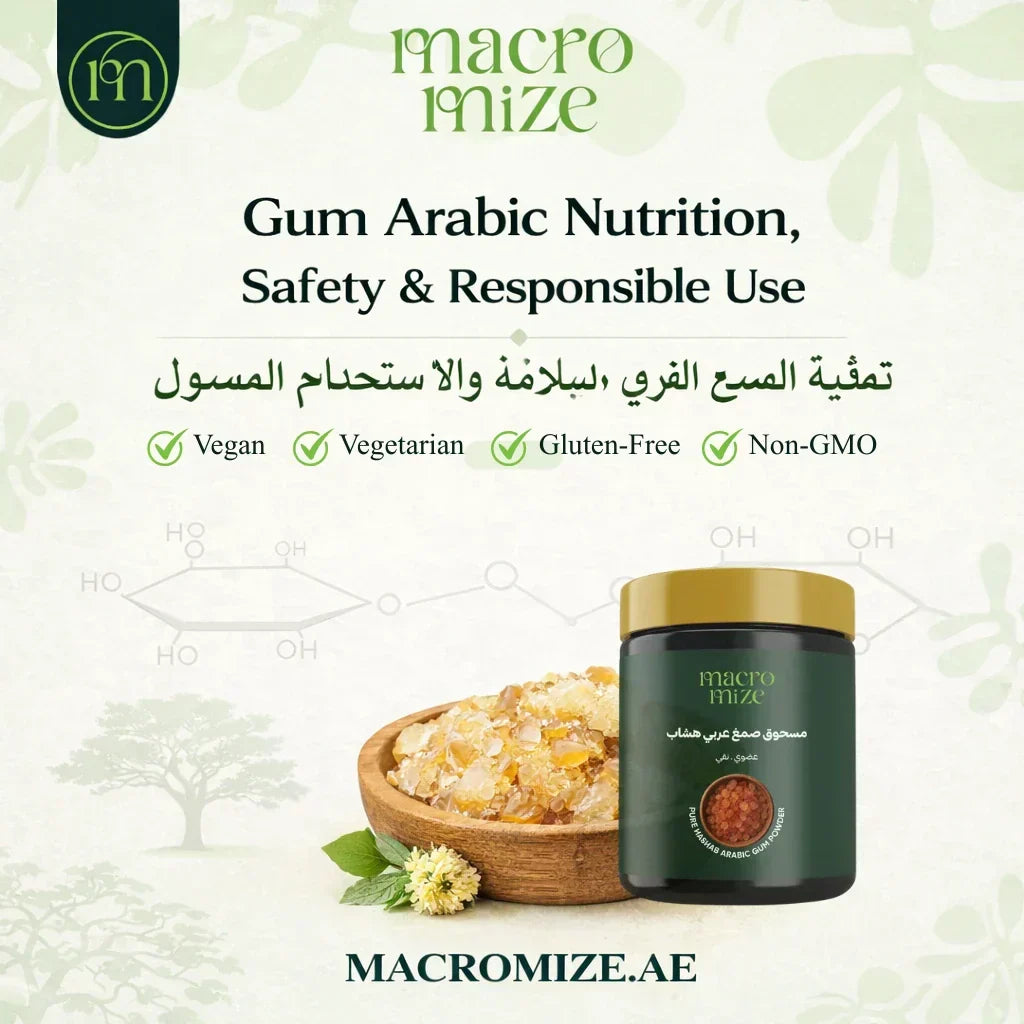
Gum Arabic, also known as acacia gum, is a natural plant exudate harvested from acacia trees. Over centuries, it has been used worldwide in foods, beverages, and supplements, prized for its soluble fibre content, functional properties, and clean natural composition. Macromize provides actual gum arabic nutrition facts for Emirati consumers looking for a healthy lifestyle.
In the UAE, where busy professionals, active families, and fitness enthusiasts often juggle multiple priorities, integrating simple, wholesome wellness ingredients into daily routines is crucial. Gum Arabic is particularly appealing because it can be incorporated into smoothies, snacks, and recipes without impacting flavor, texture, or convenience.
What Is the Nutritional Profile of Gum Arabic?

Gum Arabic is valued for its unique combination of soluble fibre and naturally occurring trace minerals. These components make it easy to include in daily routines without complicating meals, and they fit seamlessly into modern, clean-eating lifestyles in the UAE.
Benefits of Gum Arabic
- Digestive support: Feeds beneficial gut bacteria. Supports regular digestion and weight management. Acts as a prebiotic soluble fibre.
- Steady fullness: Helps you feel satisfied between meals. Useful for busy workdays. Great for post-gym routines.
- Low-calorie, low-carb: Contains minimal digestible carbohydrate. Has negligible sugar. Fits into keto or calorie-conscious diets.
- Clean, versatile ingredient: Dissolves easily into coffee or smoothies. Mixes into yogurt or baked goods. Will not change taste or texture.
- Trace minerals: Contributes small amounts of potassium. Provides calcium and magnesium. Supports an overall balanced diet.
Gum Arabic Calories & Nutrition Facts
Gum arabic nutrition facts (per 5 g serving, typical powdered form): roughly 5 g soluble fibre, negligible digestible carbohydrate, trace minerals (potassium, calcium, magnesium) and minimal protein. Acacia gum has a very low-calorie profile, typically containing about 175-300 calories per 100g. Use this as a functional fibre supplement within balanced meals. (Note: figures vary by source and product grade.)
Acacia Gum Prebiotic Fiber - Soluble Fibre
Soluble fibre is the main reason gum Arabic is prized as a functional ingredient. It absorbs water in the digestive tract, forming a soft, gel-like texture that moves gently through the system. Unlike bulkier insoluble fibres, this slow-moving fibre blends in smoothly, which makes it easy for most people to include in daily meals or snacks.
Adding soluble fibre to your routine can help:
-
Keep you feeling satisfied between meals, supporting steady energy for busy workdays or gym sessions.
-
Integrate naturally into smoothies, yogurt, coffee, or baked goods without altering taste or texture.
-
Support a balanced, clean-eating approach without complicated meal prep.
Trace Minerals
Gum Arabic also contains small amounts of naturally occurring minerals, including potassium, calcium, and magnesium. While not a primary source of these nutrients, they contribute to its clean, plant-based profile, making it appealing for health-conscious UAE residents who prioritize transparent, wholesome ingredients.
In practical terms, trace minerals in gum Arabic:
-
Complement everyday nutrition subtly.
-
Reinforce the ingredient’s functional and organic appeal.
-
Fit naturally into meals for busy professionals, active families, or post-workout routines.
What Are the Active Components in Gum Arabic?
Gum Arabic’s effectiveness in foods and beverages comes from two key natural components: polysaccharides and glycoproteins. These compounds define its texture, solubility, and versatility, making it a premium choice for clean-eating routines.
Gum Arabic Active Ingredients
The main active ingredients in gum arabic are plant polysaccharides (soluble fibre) and glycoproteins. These arabinogalactan polysaccharides give the powder its water-soluble, stabilising and prebiotic properties.
Polysaccharides
Polysaccharides are long-chain plant sugars that form the majority of gum Arabic’s soluble fibre. Their structure allows the fibre to dissolve easily in water, creating a smooth, gel-like consistency that blends seamlessly into smoothies, drinks, or recipes.
This gel-like property provides a subtle sense of fullness, making it easier to incorporate gum Arabic into snacks or meals without altering taste or texture. It also ensures that gum Arabic mixes consistently in both hot and cold recipes, which is ideal for busy UAE professionals, active families, or anyone looking to add fibre effortlessly to their daily routine.
Glycoproteins
Glycoproteins are naturally occurring protein-sugar complexes within gum Arabic. They help the fibre mix uniformly, maintain stability in liquids, and create the pleasant, slightly viscous texture often noticed in functional foods and beverages.
Thanks to glycoproteins, gum Arabic can be used in a variety of ways: stirred into morning coffee, blended into a post-workout shake, or baked into family-friendly bars. The compound ensures the ingredient remains smooth, versatile, and easy to use, without affecting flavor - making it practical for everyday clean-eating routines.
Can Gum Arabic Support Weight Management?
Gum Arabic isn't a weight-loss product on its own, but its soluble fibre content may support weight management indirectly. Because it absorbs water and forms a gel-like texture in the digestive tract, it can contribute to a feeling of fullness when added to meals or smoothies, which may help some people manage portion sizes as part of a calorie-controlled diet.
A practical approach: Add 1 teaspoon of gum Arabic powder to water, a smoothie, or yogurt around 15-20 minutes before a meal. This is not a guaranteed weight-loss method, but a simple way to incorporate more fibre into a balanced eating pattern. This is something many UAE residents already struggle to get enough of from diet alone.
As always, sustainable weight management depends on overall diet quality, activity levels, and consistency.
Is Gum Arabic a Prebiotic Fibre? Can it improve gut health?
Yes, gum Arabic is considered a prebiotic fibre, meaning it serves as a food source for beneficial gut bacteria.
Prebiotics are non-digestible fibres that travel through the digestive system largely intact until they reach the colon, where certain gut microbes can metabolize them. The soluble fibre in gum Arabic breaks down slowly, providing a gentle source of nourishment without causing abrupt digestive discomfort.
As a fermentable and soluble, acacia gum prebiotic fiber provides a gentle food source for beneficial gut microbes. When introduced gradually and as part of a balanced diet, it can support normal microbiome activity and digestive regularity for many users. These beneficial gut bacteria can improve gut health.
How Prebiotics Work
Many people wonder, is gum Arabic bad for you? Prebiotic fibres like gum Arabic actually help support the natural activity of your gut microbiome. As the beneficial bacteria feed on the fibre, they produce compounds that contribute to digestive balance.
You might not realize it, but a healthy gut is closely linked to overall well-being, including digestion, immune function, and even energy levels. While gum Arabic is not a cure or medical treatment, it can support these natural processes when included in a balanced diet. Other common prebiotic fibres include inulin from chicory root, resistant starch from bananas or cooked-and-cooled potatoes, and gums such as gum arabic.
Tip: Introduce gum Arabic gradually and pair it with a balanced diet, regular movement, and adequate hydration. Soluble fibre absorbs water to form a gentle gel in the gut, so staying hydrated helps prevent bloating or discomfort while allowing your digestive system to adjust smoothly.
Is Gum Arabic a Laxative?
No, gum Arabic is not a laxative in the pharmaceutical sense. However, as a soluble fibre, it absorbs water and forms a soft bulk in the digestive tract, supporting gentle, regular digestion.
How does soluble fibre support digestion?
When soluble fibres like gum Arabic absorb water, they soften stool and help it move smoothly through the intestines. This effect is gradual and gentle, depending on hydration, overall fibre intake, and individual tolerance. Unlike stimulant laxatives, gum Arabic works with the body to support natural digestive function without forcing immediate results. While not a medical treatment, gum Arabic can support gut health as part of a balanced diet.
Using Gum Arabic in Daily Life
To help your body adjust, it’s best to start with small amounts and gradually increase intake. Gum Arabic dissolves easily in smoothies, coffee, protein shakes, and snacks, making it convenient for busy UAE professionals, active families, and fitness enthusiasts. Its gentle fibre support fits seamlessly into a clean, balanced eating routine, helping digestion naturally.
Try Macromize 100% Pure Gum Arabic
Is Gum Arabic Bad for You?
No. Gum arabic is not considered bad for you when used as directed. It's a natural, plant-derived soluble fibre that has been consumed safely in foods and beverages for a long time in the UAE. Major food safety authorities classify it as generally recognized as safe (GRAS) for use as a food ingredient.
For most healthy adults, moderate daily intake (see dosage guidance below) causes no harm. Like any concentrated fibre source, it can cause mild, temporary digestive adjustment in some people when introduced too quickly, but this is a tolerance issue, not a safety concern.
The short answer: Gum arabic isn't bad for you. It's simply a concentrated fibre supplement that, like any fibre source, works best when introduced gradually and paired with adequate water intake.
Gum Arabic Side Effects: What to Expect
Gum Arabic is generally well tolerated, but some individuals may experience minor, temporary digestive effects. Knowing what to expect can help you use it confidently and integrate it into your modern UAE lifestyle.
What are the side effects of acacia gum people might notice include:
-
Mild bloating or gas, especially when first introducing fibre.
-
Slight softening of stool, which is a normal response to soluble fibre.
-
Changes in digestion speed or feeling of fullness, which usually adjust over time.
-
Occasional mild cramping in sensitive individuals, typically temporary
How to Incorporate Gum Arabic Into Your Daily Routine
Macromize suggests the arabic gum usage in your healthy lifestyle:
-
Start with small amounts in drinks or recipes and gradually increase as your body adjusts.
-
Try pairing gum Arabic with foods containing natural fats or proteins, which can help smooth digestion.
-
Spread your intake throughout the day instead of consuming it all at once to minimize any digestive discomfort.
-
Make it part of snacks or meals you already enjoy, like morning smoothies or yogurt, to make it easier on the stomach.
(Note: follow product-specific directions and consult a professional when in doubt.)
Who Should Not Take Acacia Fiber?
If you’re wondering whether you should take acacia, consult a professional if you belong to certain groups.
-
Pregnancy and breastfeeding: Research is limited; consult a healthcare provider. Using it as part of a balanced, clean diet is generally acceptable once guidance is received.
-
Digestive sensitivities: Individuals with a history of digestive discomfort or conditions should check with a professional before use.
-
Kidney concerns: Gum Arabic is generally not ‘bad’ for the kidneys. In fact, studies prove its beneficial aid in reducing oxidative stress and inflammation. Thus, it has a suggested aid in managing chronic kidney disease (CKD). Those with kidney issues should seek advice to ensure safe integration into their daily routine.
-
Allergies or intolerances: Anyone with known allergies to plant fibres or related substances should exercise caution and consult a professional.
How Much Arabic Gum Should I take daily?
While there isn’t an official dietary recommendation for gum Arabic like there is for vitamins or minerals, research studies give practical guidance. Clinical trials have shown that most adults tolerate 20–40 grams per day without serious side effects, with only mild digestive effects reported at higher doses.
How Macromize Fits Into Your Routine
Macromize offers premium gum Arabic powder designed for modern, clean-eating lifestyles. With organic, low-carb, keto-friendly, and sugar-free options, it’s easy to incorporate into morning smoothies, post-workout shakes, or family-friendly recipes without compromising taste or quality.
For UAE professionals, active families, and health-conscious gym-goers, Macromize wellness products makes it simple to enjoy the benefits of gum Arabic as part of a balanced daily routine. Integrating it into your meals and snacks allows you to support a clean-eating lifestyle in a practical and enjoyable way, making functional nutrition a natural part of everyday life.
Macromize Disclaimer
This content is educational only and not medical advice. Always consult a qualified healthcare professional before adding new ingredients or supplements to your diet.
Share:
What Is Gum Arabic? Source, Tree, and How It Is Produced
Gum Arabic Powder – How to Use It in Food, Drinks & Painting Crafts