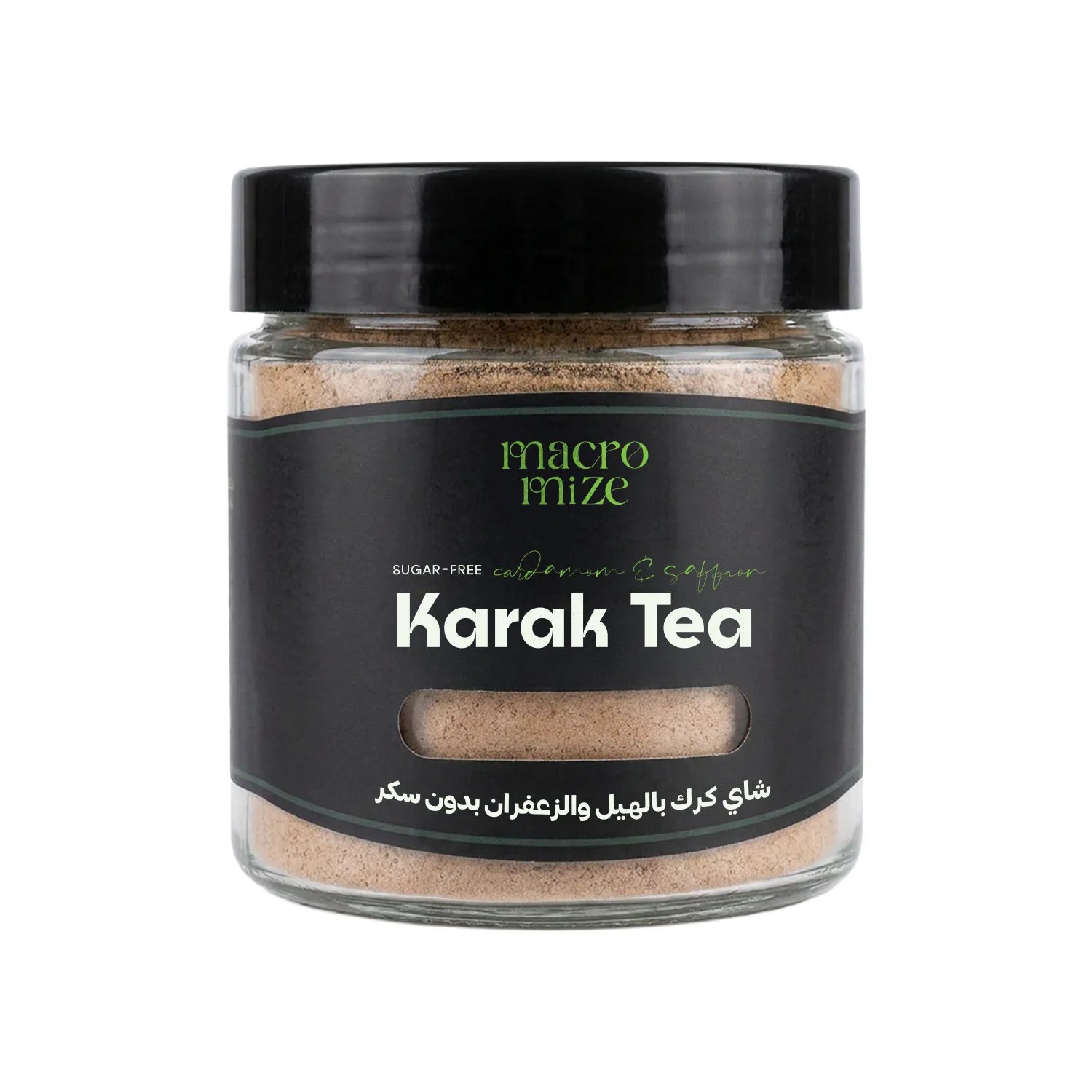
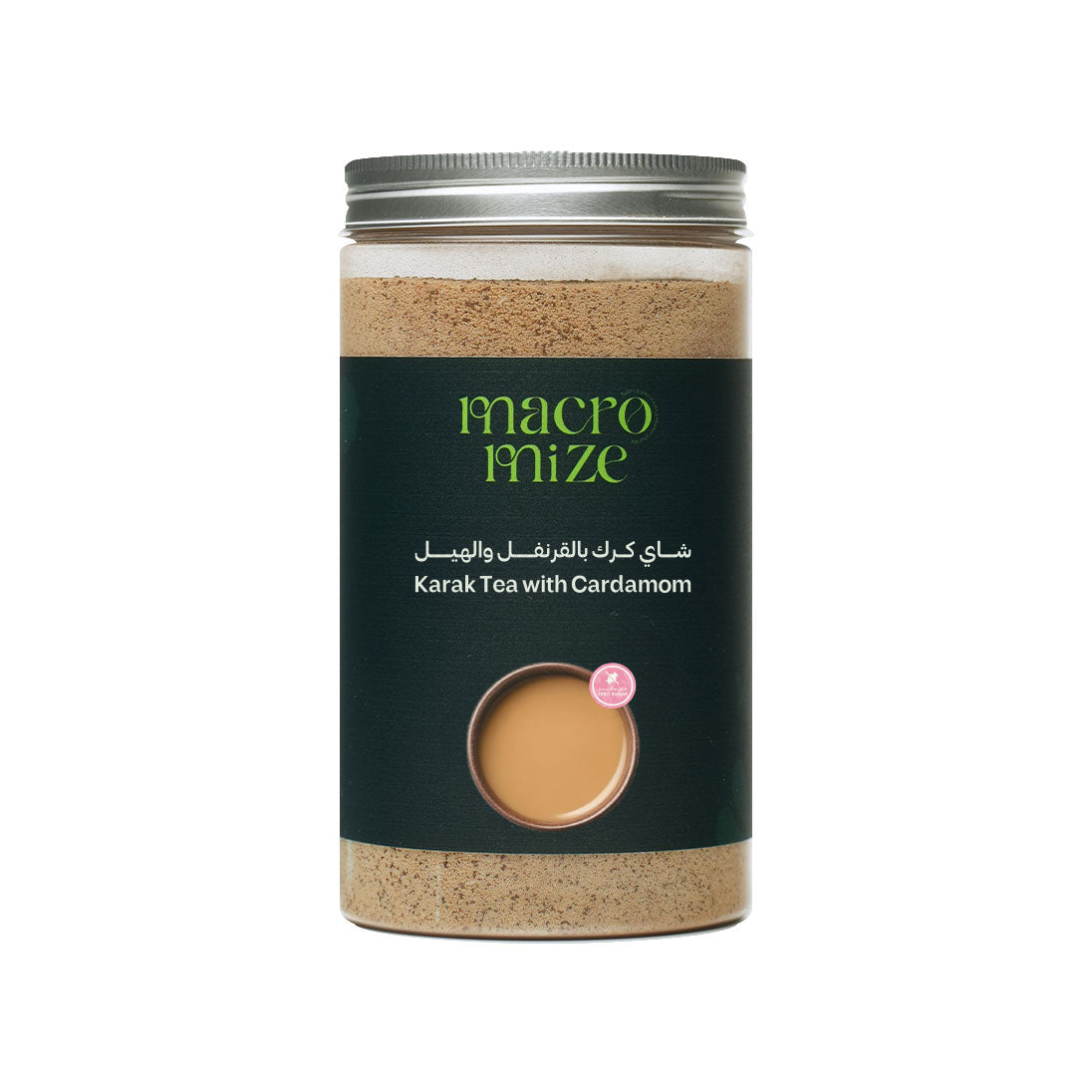

هل شاي الكرك من ماكروميز خالي من السكر؟
اي نعم، خالي تماماً من السكر ومحلى بستيفيا طبيعي، ومناسب للي يتبعون نظام كيتو أو يحاولون يبتعدون عن السكر.
شنو المكونات الأساسية في شاي الكرك من ماكرومايز ؟
يحتوي على بودرة حليب جوز الهند، بروتين الحليب، مستخلص الشاي، وتوابل طبيعية مثل الزنجبيل، الهيل، والقرنفل – ومحلى بستيفيا.
هل يحتوي شاي الكرك من ماكرومايز على الحليب؟
اي نعم، فيه بودرة حليب جوز الهند وبروتين الحليب، فما يحتاج تضيف له حليب أبد – بس موية حارة وهو جاهز.
أكيد. لأنه خالي من السكر وما فيه كربوهيدرات مضافة، فهو مناسب تماماً للكيتو والأنظمة قليلة الكرب.
هل شاي الكرك من ماكرومايز مناسب للكيتو؟
بس ضيف له موية حارة وحرّك. كل شي فيه جاهز – الحليب، التوابل، والطعم الأصيل.
شلون أجهز شاي الكرك من ماكرومايز؟
What is the difference between karak and chai?
The main difference lies in strength and preparation method. "Chai" is the Hindi/Urdu word for tea and can refer to any tea preparation, from light to strong. Karak chai, however, specifically means "strong tea" and involves a particular brewing technique where tea is boiled repeatedly until it becomes concentrated, thick, and deeply flavored.
Regular chai might be steeped gently or boiled once or twice, while karak tea requires multiple rounds of boiling to achieve that signature intensity. Karak is always made with evaporated or condensed milk (never just regular milk), giving it a creamy, almost caramel-like richness. The spicing is also different—karak relies heavily on cardamom and saffron for flavor, whereas traditional Indian masala chai includes ginger, cloves, cinnamon, and black pepper.
Texture-wise, karak has a thicker, more velvety consistency compared to lighter chai varieties. Now, if you want to know how to make karak chai like chaiwala involves that characteristic back-and-forth pouring technique between pots to create froth and aerate the tea. This process is what transforms simple chai into the beloved karak experience. Macromize brings you that premium signature-level karak tea with no sugar. Give it a Try!
Is Karak Chai healthy? How strong is Karak Chai?
Karak chai offers several karak chai health benefits when consumed in moderation. The black tea base provides antioxidants (polyphenols) that support heart health and reduce inflammation. Cardamom, the signature spice, aids digestion, freshens breath, and has antimicrobial properties. Karak chai is intentionally very strong—that's literally what "karak" means in Arabic. Macromize offers karak tea with saffron that adds even more benefits—saffron contains mood-boosting compounds and additional antioxidants.
However, traditional karak's high sugar and full-fat milk content can be a concern if you're watching calories or managing diabetes. That’s why Macromize Karak Chay has zero added sugar. Therefore, Macromize takes care of healthy options. Calories in karak chai typically range from 150-250 per cup, depending on sugar and milk amounts. Our Chai Karak has Organic coconut milk powder, so you don’t need to worry about extra calories and sugar intake. Is karak chai good for you? Yes, our tea serves controlled portions of calories, carbs, and fat. Look at the ‘Ingredients’ table above.
For a balanced approach, you can try making karak chai for one person in seconds at home, where you can control ingredients—use less sugar, choose low-fat milk, or try sugar-free alternatives. Products like Macromize Karak Chai offer portion-controlled options that let you enjoy the authentic taste with better nutritional profiles. Enjoy karak as an occasional treat rather than multiple cups daily for the best health outcomes.
Is karak high in caffeine? Who should not drink chai tea?
Yes, karak is relatively high in caffeine compared to regular tea, though still less than coffee. A typical cup contains 60-80mg of caffeine, while regular chai has 40-50mg and coffee has 95-200mg. The higher caffeine comes from using more tea leaves and the extended boiling process, which extracts more caffeine from the leaves.
People with caffeine sensitivity should avoid or limit karak chai, especially in the evening, as it can cause jitters, anxiety, or sleep disruption. Those with acid reflux or GERD should also be cautious - the strong black tea and spices can trigger heartburn in sensitive individuals. The tannins in heavily brewed karak may irritate an empty stomach, so it's best consumed with or after food.
People with iron deficiency should avoid drinking karak with meals, as tea tannins inhibit iron absorption from food. Those on certain medications (especially blood thinners or anxiety medications) should consult doctors, as tea compounds can interact with some drugs. For health-conscious options, we serve Karak Chai controlled portions and customizable sweetness levels suitable for healthy tea options.