
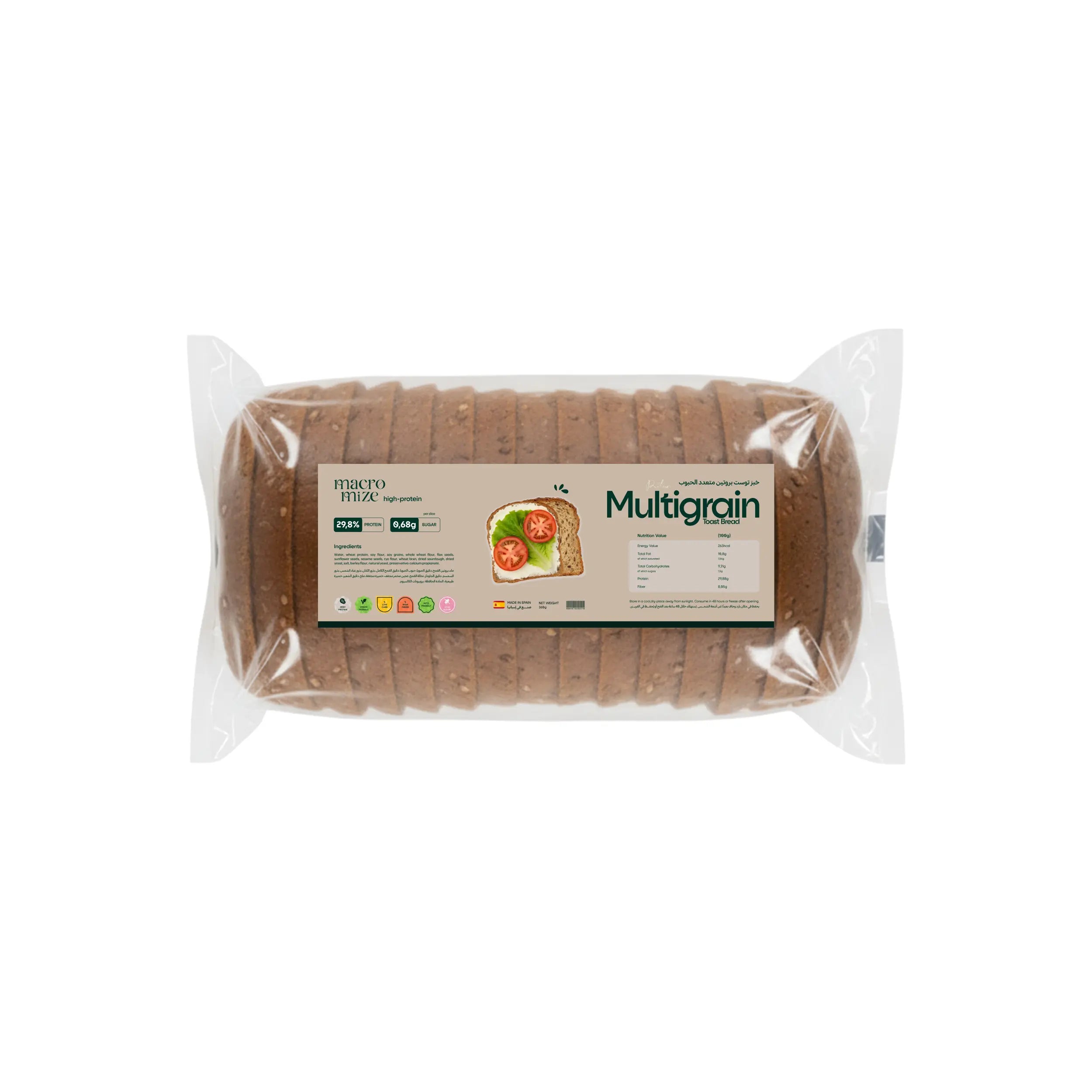
What Is High Protein Multigrain Toast Bread?
High protein multigrain toast bread combines multiple grain sources with concentrated protein ingredients to deliver significantly higher protein content than standard bread products. This product contains 29.88g protein per 100g, approximately three times the protein found in regular multigrain bread.
A typical bread slice weighs 30 to 35g, providing approximately 9g protein per slice. This makes it comparable to protein content in one egg or 30g of chicken breast, delivered in bread form.
Understanding Multigrain Bread Nutrition
Multigrain bread refers to bread made with two or more types of grains or seeds. The term "multigrain" indicates variety in grain sources but does not automatically mean the bread is whole grain or higher in nutrients. Some multigrain breads use primarily refined white flour with small amounts of seeds added for appearance.
Our product contains whole wheat flour as a significant ingredient, making it closer to whole grain bread in fiber content. The wheat bran addition increases fiber further. However, the high wheat protein content means this is not purely whole grain bread, as wheat protein is an isolated protein ingredient rather than a whole grain component.
The nutritional advantage of quality multigrain bread comes from the variety of grains and seeds, each contributing different nutrients. Flax provides omega-3s, sunflower seeds offer vitamin E, sesame contributes calcium, and whole wheat supplies B vitamins and minerals like magnesium and zinc.
What Makes Multigrain Toast Bread Unique
Protein, Nutrition & Functional Comparison (Per 100g)
| Feature | Macromize High-Protein Multigrain Bread | Regular Multigrain Bread | Brown / Whole Wheat Bread |
|---|---|---|---|
| Protein | 29.88g (29.88%) | 8–12g | 8–10g |
| Protein Quality | Added plant protein blend (wheat protein + soy + seeds) | Naturally occurring grain protein only | Naturally occurring wheat protein |
| Sugar | 0.68g | 4–6g | 3–5g |
| Fiber | 8.85g | 5–7g | 6–8g |
| Carbohydrates | Low-carb formulation | High carb | High carb |
| Fat Quality | Seeds-based healthy fats (flax, sunflower) | Minimal / refined oils | Minimal |
| Grain Profile | Wheat, soy, flax & sunflower seeds | Mostly wheat with seed topping | Wheat only |
| Diet Compatibility | Keto-friendly, high-protein, low sugar | General diet only | General diet only |
| Vegan Friendly | Yes (100% plant-based protein) | Yes | Yes |
| Functional Use | Muscle recovery, satiety, balanced energy | Energy only | Energy + fiber |
| Craft & Quality | Premium Spanish artisan formulation | Mass-produced | Mass-produced |
Protein Density Comparison (Food Context)
| Food Item | Protein per 100g | Key Insight |
|---|---|---|
| Macromize Multigrain Bread | 29.88g | Protein density comparable to animal foods |
| Chicken Breast | ~30g | Animal protein reference |
| Tofu | 8–15g | Moderate plant protein |
| Cooked Lentils | ~9g | High fiber, low protein density |
| Regular Bread | 8–12g | Carb-dominant food |
Is Multigrain Toast Healthy?
Whether multigrain toast is healthy depends on the specific product composition and how it fits your dietary needs. General multigrain bread can be healthy when made with whole grains, minimal added sugars, and beneficial seeds. However, some commercial multigrain breads use mostly refined flour with seeds added only for marketing appeal.
Macromize offers specific multigrain bread nutrition facts:
Higher Fiber: 8.05g per 100g compared to 2 to 4g in white bread or 5 to 7g in standard whole grain bread. Fiber supports digestive function and helps regulate blood sugar response.
Significantly Higher Protein: Nearly 30g per 100g supports protein intake goals for active individuals. Protein increases satiety and supports tissue maintenance.
Lower Carbohydrates: 9.31g per 100g versus 40 to 50g in typical bread. This matters for people monitoring carbohydrate intake, though it is not low enough for strict low carb diets.
Minimal Sugar: 1.5g per 100g is low compared to breads with added sweeteners or dried fruits.
Seed Variety: Multiple seed types provide diverse nutrients including healthy fats, vitamins, and minerals.
The higher multigrain bread calories content (263 per 100g vs 240 to 260 for regular bread) comes from increased protein and fat from seeds. Whether this is advantageous depends on your calorie and macronutrient targets.
Perfect For
Fitness Enthusiasts • Bodybuilding • High-Protein Diets • Vegan Nutrition • Muscle Building • Weight Management • Active Lifestyles • Healthy Eating
Ingredients
Nutrition Facts
Amount Per Serving
% Daily Value*
* The % Daily Value (DV) tells you how much a nutrient in a serving of food contributes to a daily diet. 2,000 calories a day is used for general nutrition advice.